Examples
Note
These images were made with older versions (2.1 to 2.3). The results today are the same or better: every test model in the 2.12.20 check came out as good as or better than 2.8.0. See What's New.
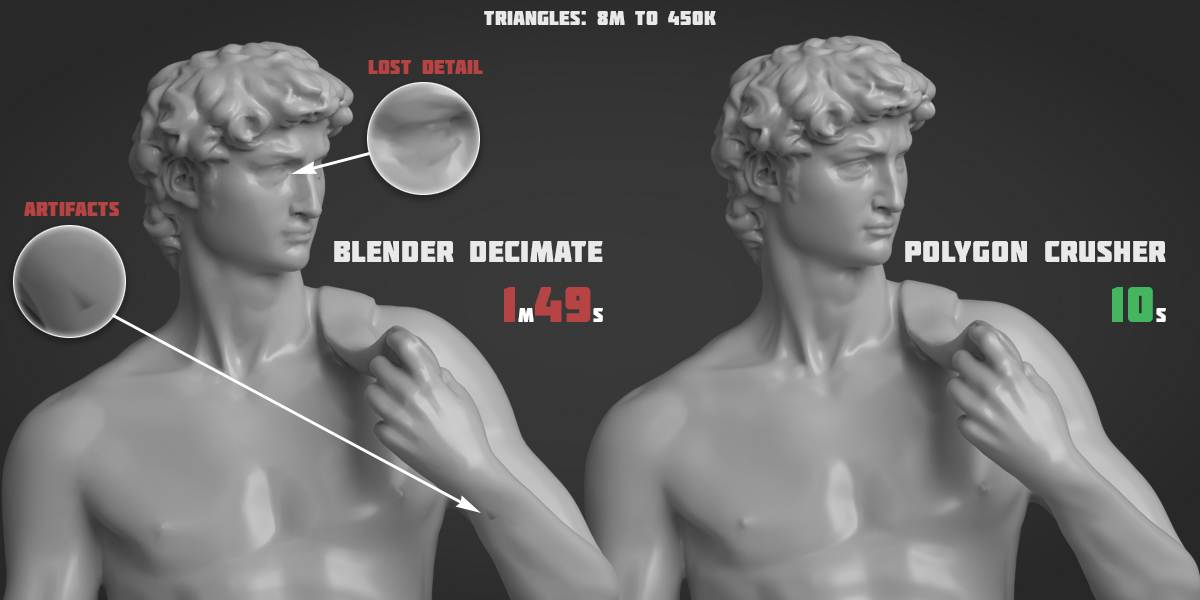
High-poly sculpt — 8M → 450K triangles
A photogrammetry-grade scan crushed to about 6% of its original triangle count. The timings in this image come from an older test (version 2.1, machine not recorded). Our repeatable test measured about 3× faster than Blender's built-in Decimate on meshes of 1–7.5 million triangles; see the Benchmark page.
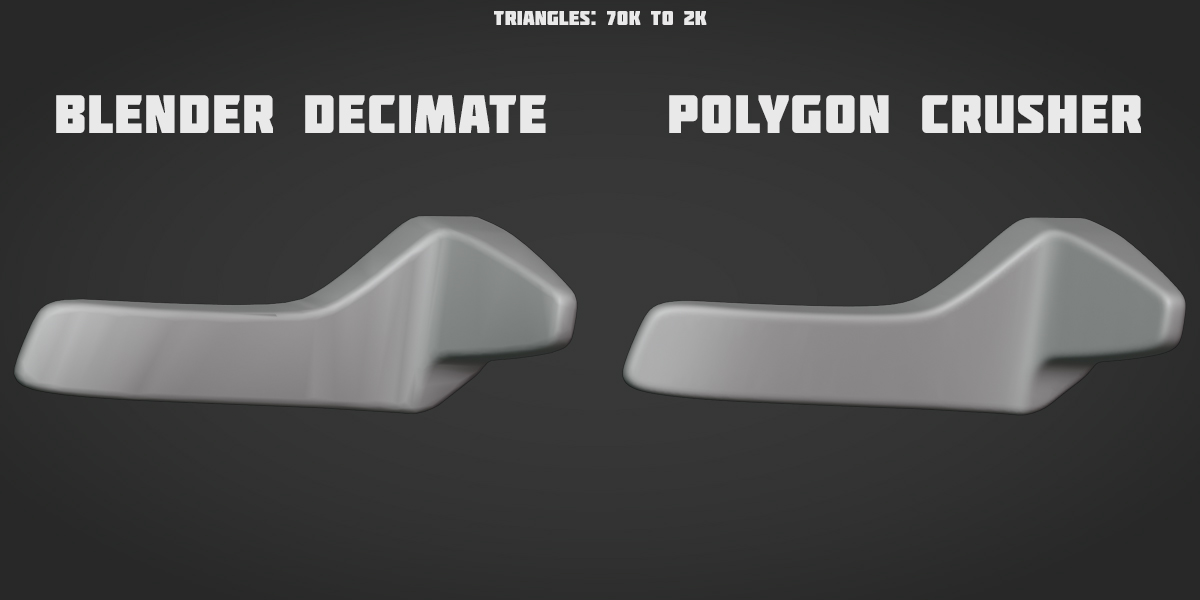
Hard-surface mesh — 70K → 2K triangles
A 97% reduction on a hard-surface mesh. Polygon Crusher preserves the silhouette and curvature of the original shape on a tight triangle budget, where Decimate distorts the form.
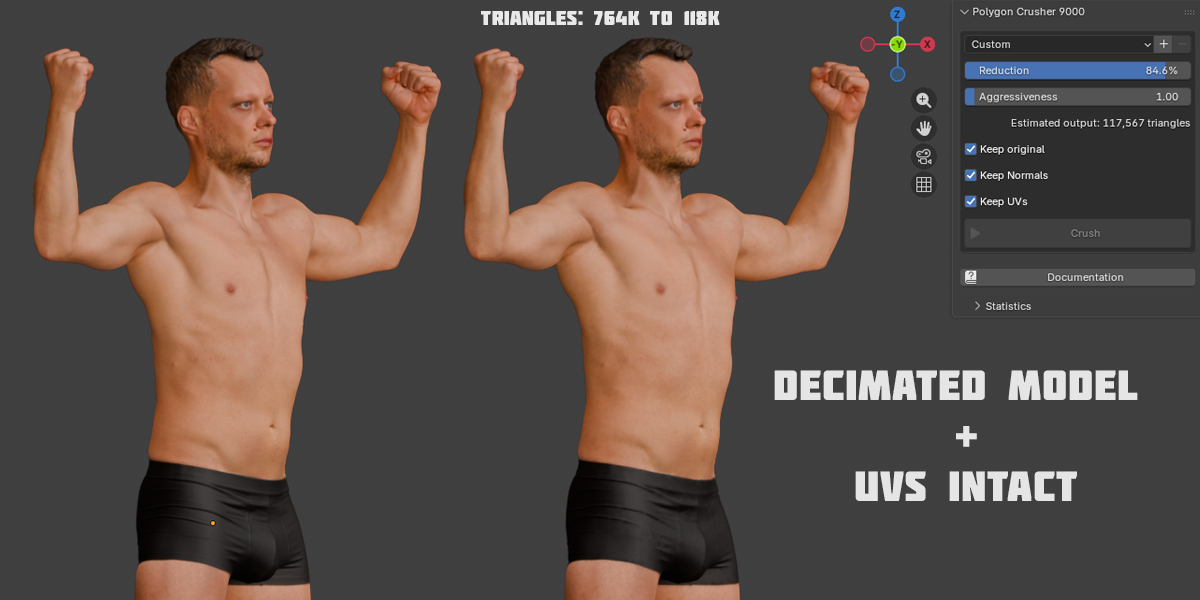
Textured photogrammetry scan — 764K → 118K triangles, textures kept
A full-body 3D scan crushed by ~85% with Textures switched on under Keep. The decimated mesh keeps the original UV map intact, so the photographic texture stays correctly mapped onto the lower-poly result: no re-baking, no seam distortion.
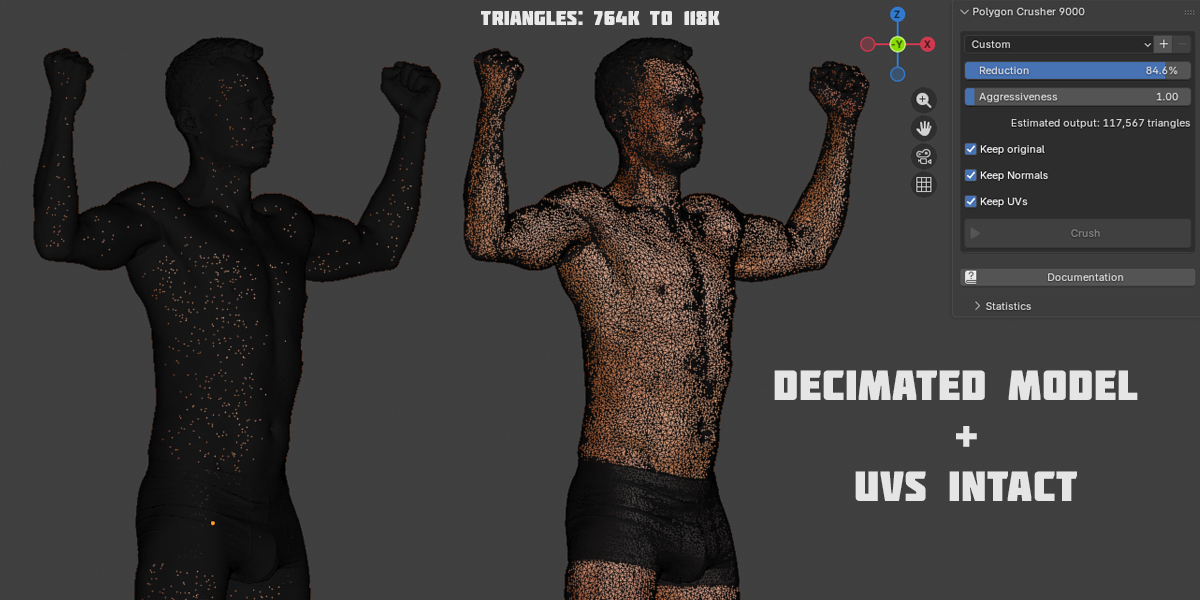
The wireframe view of the same crush makes the topology change explicit — dense original on the left, ~85% lighter decimated result on the right:
Remesh to clean quads
Remesh turns a dense scan or sculpt into evenly sized quads at the count you ask for, for example a 60,000-triangle scan rebuilt with a sixth of the faces. See Remesh (Quads).